
Agreement will be signed during groundbreaking course on biorenewables at the university campus in Sergipe.

From October 27–29, the Federal University of Alagoas (UFAL) host the first edition of the Itinerant Biorenewables School: Integrated Approaches in Synthetic Biology for Biofoundries. This initiative from the Brazilian Center for Research in Energy and Materials (CNPEM) centered around advanced training in biotechnology and the establishment of new scientific collaborations in the country.
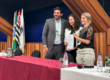
During the event, a four-year partnership agreement was signed between CNPEM and UFAL, forming the foundation for cooperation in science, technology and personnel training between the two institutions. The accord includes joint efforts in training, research and innovation with a focus on biotechnology, synthetic biology and biorenewables.
“This partnership represents an important step toward expanding CNPEM’s presence in different regions of the country and strengthening local science and innovation ecosystems. UFAL brings with it relevant scientific and strategic competencies, and this collaboration will make it possible to carry out projects and activities that will impact biotechnology, personnel training, and sustainable regional development,” said Mário Murakami, Director of the Brazilian Biorenewables National Laboratory (LNBR), the CNPEM unit that is leading organization of the course.
The initiative launches a new format for CNPEM’s itinerant courses in order to decentralize advanced training opportunities and to bring researchers, students and professionals in the North and Northeast regions of the country closer to the infrastructures and competencies at the Center.
“The cooperation agreement between UFAL and CNPEM has already been signed, and we expect a continuous exchange between teams from both institutions, aiming to enhance our competencies and competitiveness in science, technology, and innovation. I believe this is a very special moment for the Federal University of Alagoas, which has the privilege of hosting the CNPEM team for this unprecedented off-site workshop focused on bioeconomy, biotransformation, and biosynthetics — a strategic area for Brazil. It is worth noting that the New Industry Brazil (NIB) program defines this field as strategic for both the defense and health sectors. The Federal University of Alagoas now has the opportunity not only to update technologies but also to align procedures, enabling UFAL and CNPEM teams to work together to solve national challenges. It is important to highlight that today UFAL has a mature research environment, with six graduate programs participating in this week’s workshop,” emphasized Professor Josealdo Tonholo, Rector of UFAL.
Strategic cooperation
The agreement includes conducting joint workshops, developing collaborative research projects, fostering mobility among students and researchers, and creating an Integrated Center for Research and Innovation in Biotechnology at UFAL, with technical and scientific support from CNPEM.
LNBR, the CNPEM unit responsible for the course, is an international reference in research on the bioeconomy. Its platforms combine synthetic, structural and computational biology to design micro-organisms and enzymes for the sustainable production of biofuels, biochemicals and biomaterials, as well as economic and environmental analysis that guides technology transfer to the productive sector.
About LNBR
The Brazilian Biorenewables National Laboratory (LNBR) works to address scientific challenges that are strategic for Brazil in order to promote energy transition and develop a sustainable bioeconomy. Its interdisciplinary competencies in bioprospecting, synthetic biology, biocatalysis, bioprocesses and sustainability are integrated into the development of technologies founded on renewable sources, domestic production chains and Brazilian biodiversity. Its infrastructure on the cutting edge of multi-omics, synthetic biology, precision fermenting, and scaling-up of bioprocesses is open to the scientific community in order to strengthen the national bioeconomy ecosystem and partnerships with the productive sector. The biotechnology platforms developed by LNBR, which are made available for research and innovation, are intended to boost Brazil’s autonomy and competitiveness in the production of biofuels, chemicals and materials. LNBR is part of the Brazilian Center for Research in Energy and Materials (CNPEM) in Campinas, São Paulo, a private, non-profit organization overseen by the Ministry of Science, Technology and Innovation (MCTI).
About CNPEM
The Brazilian Center for Research in Energy and Materials (CNPEM) is home to a state-of-the-art, multi-user and multidisciplinary scientific environment and works on different fronts within the Brazilian National System for Science, Technology and Innovation. A social organization overseen by the Ministry of Science, Technology and Innovation (MCTI), CNPEM is driven by research that impacts the areas of health, energy, renewable materials, and sustainability. It is responsible for Sirius, the largest assembly of scientific equipment constructed in the country, and is currently constructing Project Orion, a laboratory complex for advanced pathogen research. Highly specialized science and engineering teams, sophisticated infrastructure open to the scientific community, strategic lines of investigation, innovative projects involving the productive sector, and training for researchers and students are the pillars of this institution that is unique in Brazil and able to serve as a bridge between knowledge and innovation. CNPEM’s research and development activities are carried out through its four National Laboratories: Synchrotron Light (LNLS), Biosciences (LNBio), Nanotechnology (LNNano), Biorenewables (LNBR), as well as its Technology Unit (DAT) and the Ilum School of Science — an undergraduate program in Science and Technology supported by the Ministry of Education (MEC).