
The project analyzed 30 studies in different areas of the biome and shows how climate, soil, and management influence the storage of different carbon fractions in the soil, with possible impacts on the environment and productivity
The Cerrado soil can function as an important carbon reservoir. Part of this carbon reaches the soil through vegetation and can remain stored for different periods. Its permanence in the soil depends on the interaction between direct and indirect factors, such as climate, the physical-chemical characteristics of the soil, and carbon input by vegetation. This is what a study carried out by researchers from the Brazilian Center for Research in Energy and Materials (CNPEM) in partnership with ESALQ/USP and Colorado State University, in the United States, shows. The work brought together data from 30 studies carried out in different regions of the biome, combining its own data and the literature.

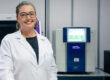
CNPEM researcher, Sarah Tenelli, with part of the analyzed samples
CNPEM researcher, Sarah Tenelli, with part of the analyzed samples
Areas of native vegetation, agriculture, pastures, and integrated systems were analyzed to understand how land use and environmental variables control the storage of the main carbon fractions in the soil.
“The Cerrado is one of the main agricultural regions in Brazil and, at the same time, has great environmental importance. Understanding what happens to soil carbon when native vegetation is converted to agriculture is important both for conservation and for thinking about more sustainable agricultural systems, adapted to the characteristics of each soil and climatic condition”, explains Sarah Tenelli, researcher at the Biorenewables Unit at CNPEM, who conducted the study during her sandwich postdoctoral program at Colorado State University.
One of the main conclusions is that the carbon fractions in the soil respond to distinct factors. The carbon in particulate organic matter is formed by poorly decomposed organic residues and is mainly protected within soil aggregates. This fraction showed greater sensitivity to temperature and pH, variables related to microbial decomposition. The carbon in organic matter associated with minerals, formed by more processed residues, is mainly related to the silt and clay content, which favors its stabilization.
“Higher air temperature and soil pH values were associated with lower levels of particulate carbon, while soils with higher levels of silt and clay showed greater potential for carbon stabilization through association with minerals, favoring its protection in the soil”, says the researcher.
To arrive at the results, the researchers gathered information on average annual temperature, water availability, vegetation productivity, soil texture, and pH. These data were analyzed using statistical models that allowed for the evaluation of direct and indirect relationships between these variables and the storage of carbon fractions.

Sarah Tenelli and Carlieze Isabel da Conceição during an experiment at the CNPEM Biorenewables Unit laboratory.
Importance of carbon in soil
Soil organic matter is composed of living biomass, plant and microbial residues in different stages of decomposition, and compounds resulting from the metabolism of microorganisms. It plays essential roles in the soil, improving its physical, chemical, and biological quality, promoting nutrient cycling, water retention, and plant development.
Approximately half of the organic matter in soil is composed of carbon. During photosynthesis, plants remove carbon dioxide from the atmosphere and incorporate this carbon into their biomass. When plant residues reach the soil, some of this carbon is incorporated into the organic matter and can remain stored for long periods.
“When managed sustainably, soil ceases to be a source of greenhouse gas emissions and begins to act as a carbon sink. Conservation agricultural systems can help reduce the impact of climate change by removing part of the carbon from the atmosphere and storing it in the soil”, says Tenelli.
Agricultural practices that increase carbon uptake through roots and reduce soil disturbance can contribute to its protection and longer-lasting preservation. “The adoption of no-till farming, for example, can favor the protection of carbon within soil aggregates. When combined with good management practices, such as crop rotation, integrated systems, and the use of organic residues, this strategy can enhance carbon retention in both fractions of soil organic matter”, she explains.
Although the Cerrado is considered a single biome, its vegetation varies between regions, with different proportions of grasses, shrubs, and trees. Climate and soil characteristics, such as texture and minerals present, also vary across the biome and can influence how much carbon remains stored in the soil.
Much of this variation was taken into account in the research, which gathered data from different regions of the Cerrado. The survey also revealed a significant gap in the literature: there are still relatively few studies that jointly present information on carbon fractions and the physical, chemical, and mineralogical characteristics of the soil. Of the more than 100 studies initially identified in the literature review, only 30 contained the set of information necessary for the analysis.
Next steps
The research will continue with the use of models capable of simulating the dynamics of soil organic matter in different land use scenarios. To do this, the researchers selected areas in the states of Mato Grosso, Goiás, Bahia, and Piauí with detailed information on land management and use. The proposal is to evaluate how these agricultural systems can affect soil carbon dynamics in future scenarios of climate change.
The modeling considers climate data, soil characteristics, the history of native vegetation conversion, crops and management practices, as well as field-measured data on crop productivity and soil carbon stocks to validate the model results.
The study relied on data and analyses carried out at the Brazilian Center for Research in Energy and Materials (CNPEM), including soil samples analyzed in the institution’s laboratories. The research was also supported by Fapesp, including Sarah’s postdoctoral scholarship in Brazil and abroad.
About CNPEM
The Brazilian Center for Research in Energy and Materials (CNPEM) is home to a state-of-the-art, multi-user and multidisciplinary scientific environment and works on different fronts within the Brazilian National System for Science, Technology and Innovation. A social organization overseen by the Ministry of Science, Technology and Innovation (MCTI), with the involvement of the Ministry of Education and the Ministry of Health, CNPEM is driven by research that impacts the areas of health, energy, renewable materials, and sustainability. It is responsible for Sirius, the largest assembly of scientific equipment constructed in the country, and is currently constructing Project Orion, a laboratory complex for advanced pathogen research. Highly specialized science and engineering teams, sophisticated infrastructure open to the scientific community, strategic lines of investigation, innovative projects involving the productive sector, and training for researchers and students are the pillars of this institution that is unique in Brazil and able to serve as a bridge between knowledge and innovation. CNPEM’s research and development activities are carried out through its four National Laboratories: Synchrotron Light (LNLS), Biosciences (LNBio), Nanotechnology (LNNano), Biorenewables (LNBR), as well as its Technology Unit (DAT) and the Ilum School of Science — an undergraduate program in Science and Technology.